
Build World is a global platform advancing the future of cities through collective intelligence, research, and institutional collaboration.
Build World provides innovative and impactful solutions to cities, governments, companies, and NGOs addressing complex challenges in the built and natural environments. We develop visionary strategies, global crowdsolving challenges, design competitions, exhibitions, research publications and events that mobilize collective intelligence and institutional expertise. By bringing together diverse professionals, organizations, and partners from around the world, we enable collaboration across disciplines to generate meaningful, actionable outcomes and long-term positive impact.
Featured in








Our Mission
Our mission is to co-create solutions to our partners’ most pressing urban and environmental challenges by harnessing collective intelligence and technology.
We convene global expertise across disciplines to translate shared knowledge into holistic, actionable, and impactful outcomes.
Exhibited at




Key Benefits
1. Holistic, Multidimensional Solutions
Crowdsolving harnesses collective intelligence by bringing together diverse perspectives and expertise. This approach produces holistic, multidimensional outcomes and reduces risk by integrating insights across disciplines, geographies, and sectors.
2. A Proven, Integrated Methodology
Our crowdsolving method combines research, education, design, and implementation within a single, coherent framework. Through a custom process that integrates design thinking, tailored workshops and courses, and participatory platforms, we enable contributors to engage meaningfully in real-world challenges.
3. From Vision to Implementation
Build World’s approach spans the entire lifecycle of a project, from strategic vision and concept development to actionable solutions and implementation. This ensures that both participants and partners generate measurable impact while receiving visibility, recognition, and long-term value from their contributions.



Define requirements
Partners can specify project requirements, parameters, resource limitations and desired outcomes in great detail before we launch the project as a crowdsourcing challenge or competition.
Flexible involvement
Partners can be as involved or removed as they want throughout the entire process.
Innovative solutions
Partners will receive a selection of the most creative and innovative solutions due to our unique crowdsolving process that brings together a global mix of experience and skill sets.
Timely results
Partners can set time constraints on how complex they want the challenge to be and how long they want it to run for.
High quality
The design solutions delivered are of the highest quality because of the strong professionalism of the participants, experts and advisors involved in the process.
Global exposure
The results of the challenge can be shared with the public through articles, videos, books and exhibitions, and events promoting and assisting the successful implementation of the solutions worldwide.
Partners & Clients





Past Challenges
Resilient Homes
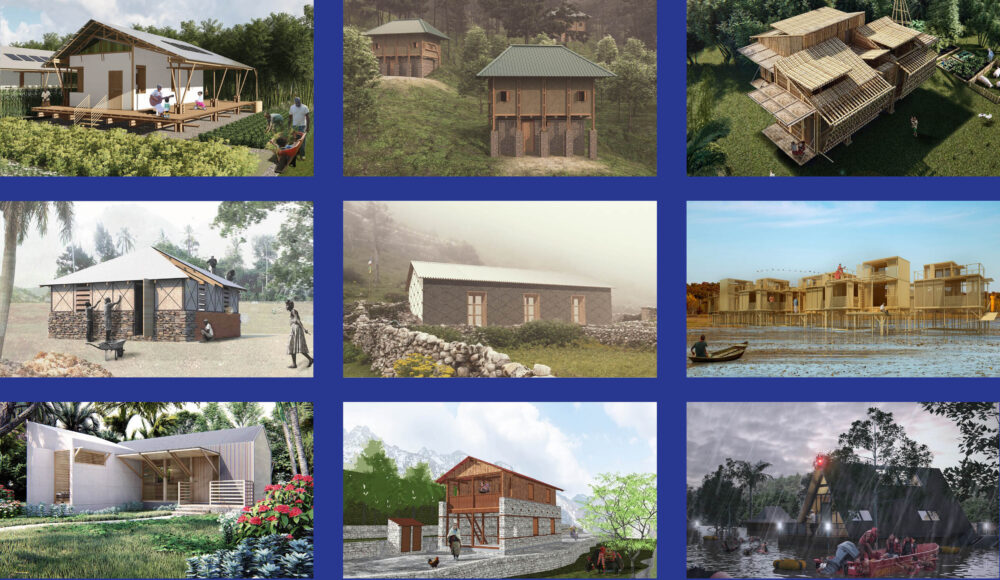
In 2018, Build World together with the World Bank, Airbnb, and GFDRR organized the Resilient Homes Challenge. It inspired and mobilized more than 3000 architects and engineers from around the world to develop designs for resilient, modular and affordable homes that cost under $10,000. Some of the pаst projects have already been implemente in the Caribbean and South East Asia, creating positive impact for thousands of people.
Image: The winning designs of the 9 finalists.
Emergency Shelters
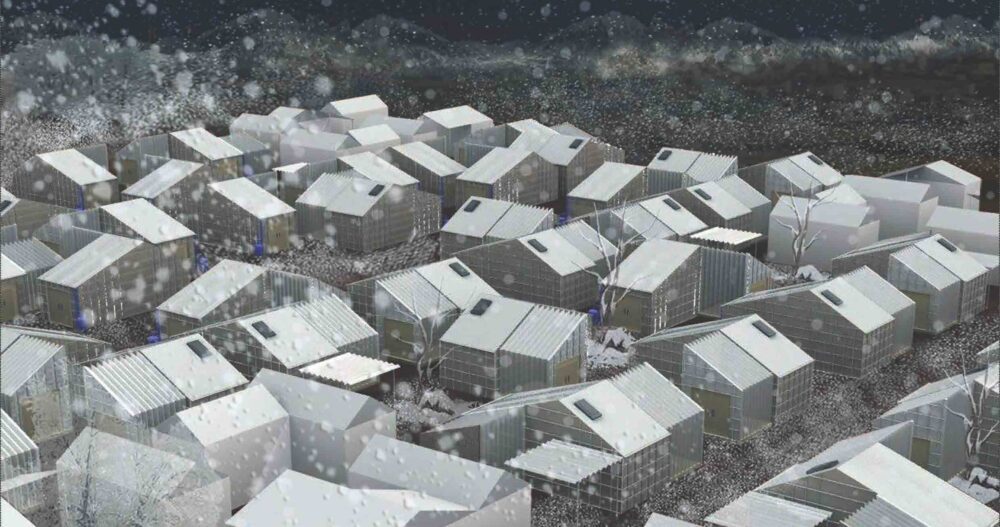
The goal of this global challenge was to generate designs for emergency shelters for the victims of wars and natural disasters. The participants in this course will design affordable and easy to build shelters, which could be implemented by OCHA, UNHCR, WBG, and other international organizations.
Image: Team Cross Hands.
Resilient Schools
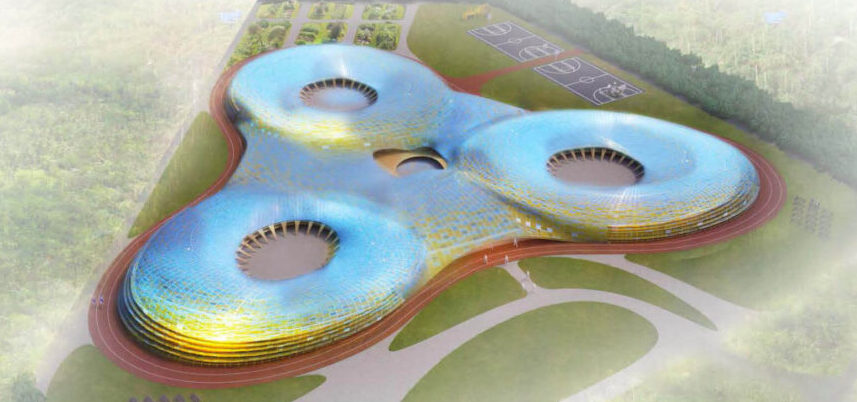
When typhoon Haiyan hit the Philippines in 2013, causing more than 5,000 deaths and destroying the homes and cities for millions, Build World latched the Resilient Schools Challenge. It resulted in more than 80 proposals for new types of school buildings that can also be used as community shelters. We can’t do much to stop natural disasters, but as architects we can help with the recovery and to build shelters that would withstand them.
Image: Team MAT-TER.
Solar Lights
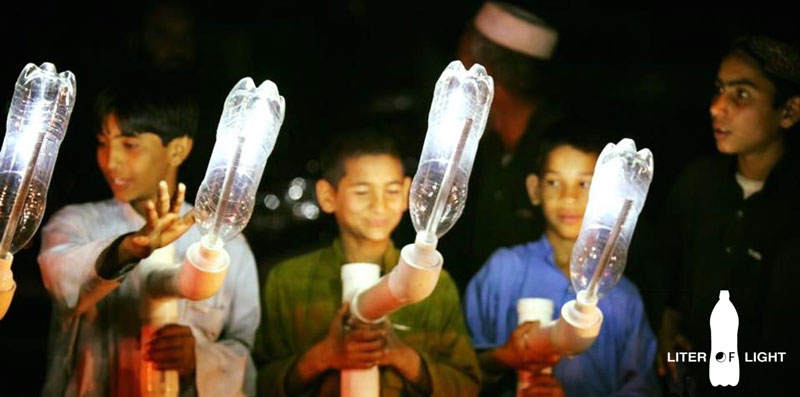
Liter of Light and Build World crowdsourced designs and taught people how to make cost-effective sustainable solar lights. The participants in this challenge designed affordable and easy-to-build lights, which will be implemented by Liter of Light and partnering organizations moving forward. These Solar Lights are for people living in underdeveloped areas where there is no affordable solution to get energy and lights.
Image: Liter of Light.
Our Process
1. Developing Solutions
Professionals and companies participate in the challenge and produce initial design solutions.
2. Feedback and Iteration
Solutions are reviewed and edited based on partners’ input and feedback sessions.
3. Winners Selection
Final solutions are submitted in front of a jury and the client, and winning designs are chosen.
4. Public Engagement
The best solutions are shared with the world through exhibits, articles, books, conferences and websites.
5. Implementation
We help the designers and our partners to implement the solutions and create positive impact.
Community
63,000
Professionals
175
Countries
18
Experts
12
Partners
Testimonials

“We are very pleased to have a collaboration with Build World and look forward to working with them in the future”
Chris Williams PhD, Director New York
UN-Habitat

“We hope that this competition with Build World has jump started a movement and a community of practice that can exchange and grow.”
Sameh Wahba PhD, Regional Director, Sustainable Development, Europe and Central Asia Region
The World Bank
Latest articles
Crowdsourcing Design Solutions at Build World
Crowdsourcing solutions or crowdsolving is not a new concept. Back in 1714 this approach was successfully used to find a way (out of more than 100 submissions) to determine longitude at sea. Today, the European Union defines it as something that ‘enables individuals and organisations to engage crowds to submit, discuss, refine and rank ideas and…
Urban consciousness as a path to evolution

Cities are about integration and evolution. They bring together people of different ages, backgrounds, cultures, education, skills, knowledge and social status. They agree to live together under common rules in a dense, defined area. Their interaction activates cities and creates the experiences that are later integrated towards the collective evolution of society. People come to…
Community and Participatory Governance
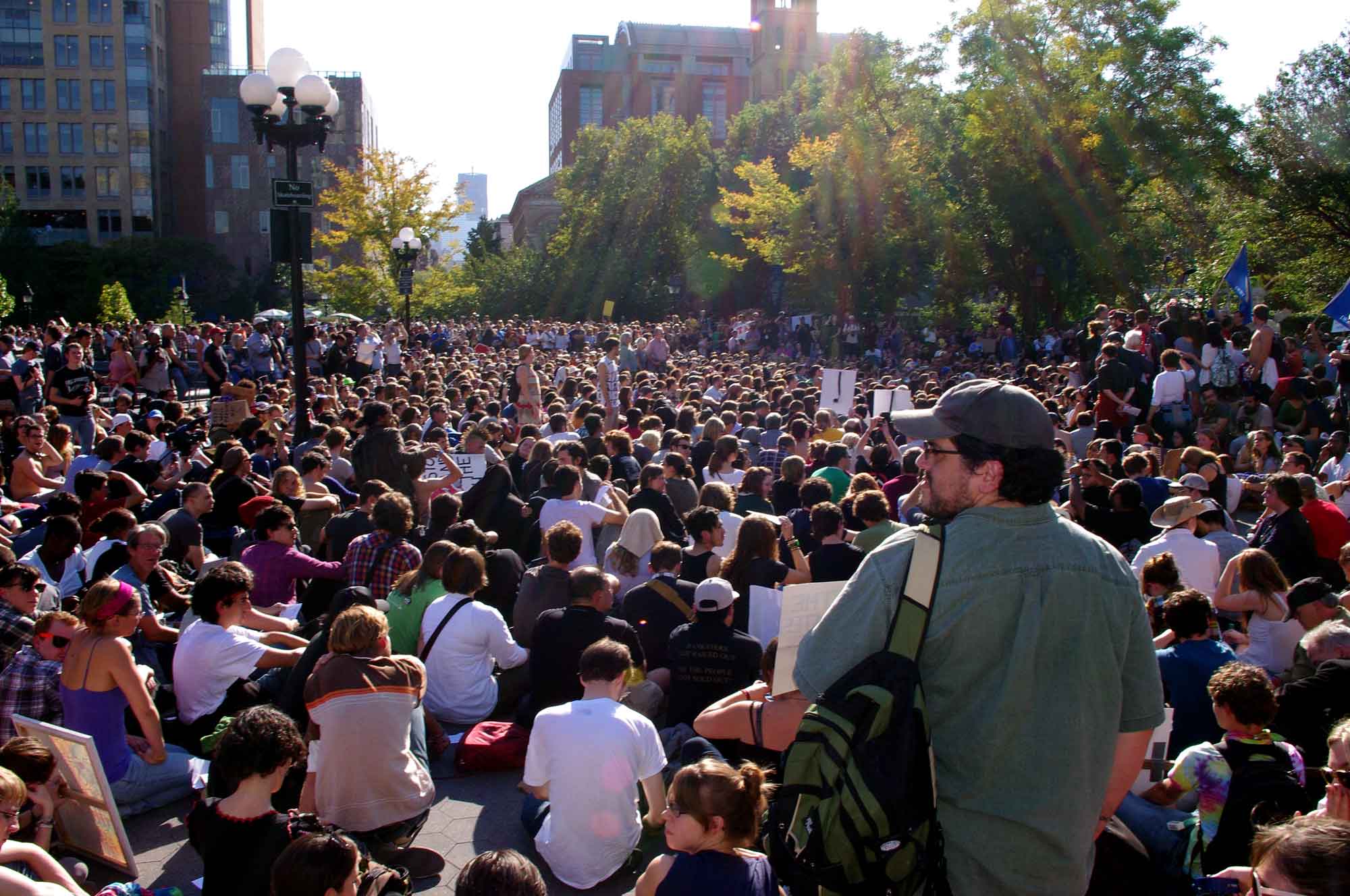
Decisions in cities are normally made in a top-down approach without the involvement of the broader community. Because of that, a lot of people feel disconnected from what happens in their cities and do not approve of urban projects and developments and how money is being spent. With all the guidelines mentioned in this article, the…
Abundance and Circular Economy
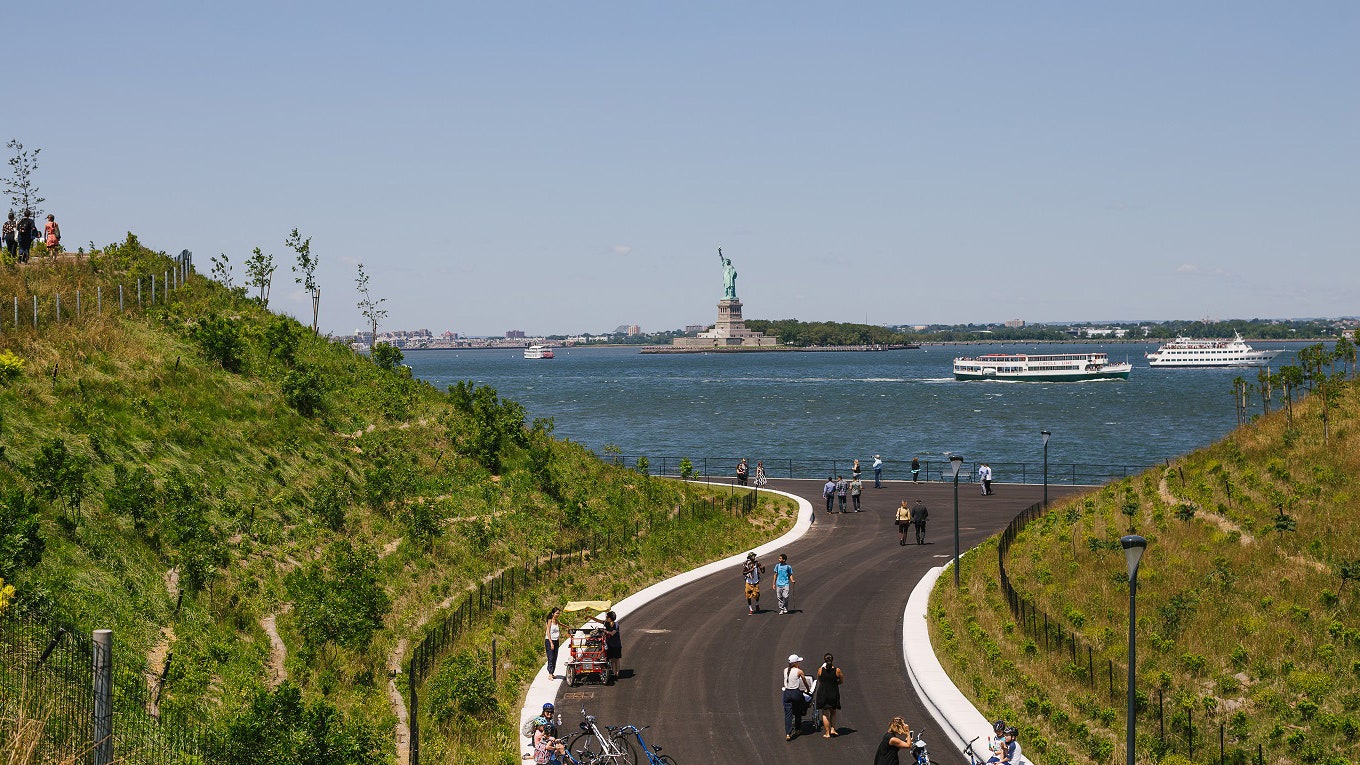
Globalization has created a hyper-connected world with many benefits, yet it has also created an overdependence on the outside and a reliance on global supply chains, usually controlled by a few companies, to supply most basic goods and services. Given the state of the world with all the problems related to climate and increased conflicts,…
Energy, Sustainability and Resilience

Climate change and its effects are some if the biggest challenges of our time. The COP21 target for 2050 is to reduce today’s CO2 emissions by 80-90%. Currently, buildings account for about 40% of total emissions in cities. Many of them are due to the building’s energy inefficiency. In the EU roughly 75% or buildings…
Shared and Integrated Mobility
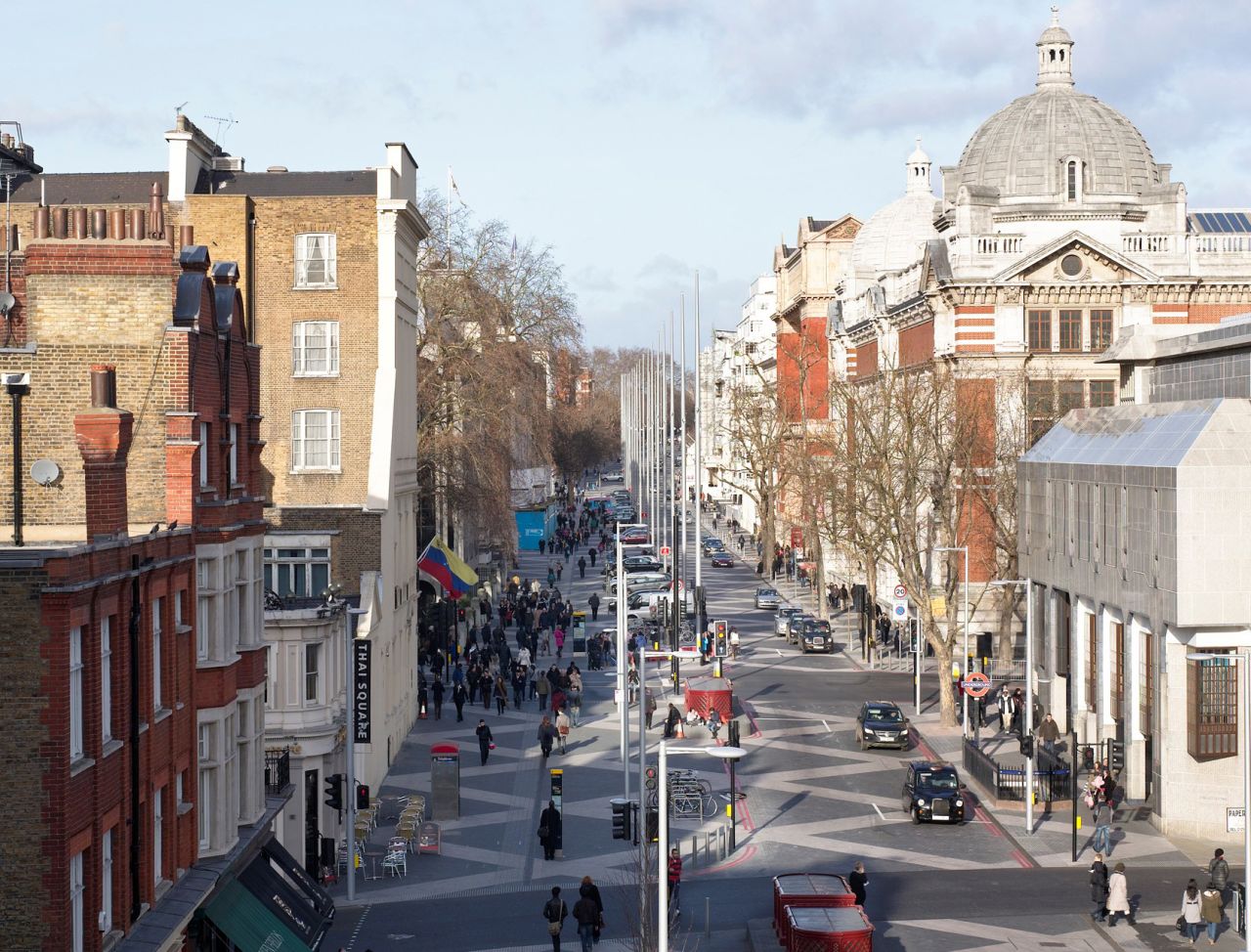
Wherever needed, physical connectedness in cities can be guaranteed with an excellent infrastructure for walking, biking, private and public transportation networks. With the new advancements and evolution of mobility technologies will come new ways of commuting, such as electric and self-driving cars, aerial rideshare, etc. A lot of resources are going into developing electrical and…